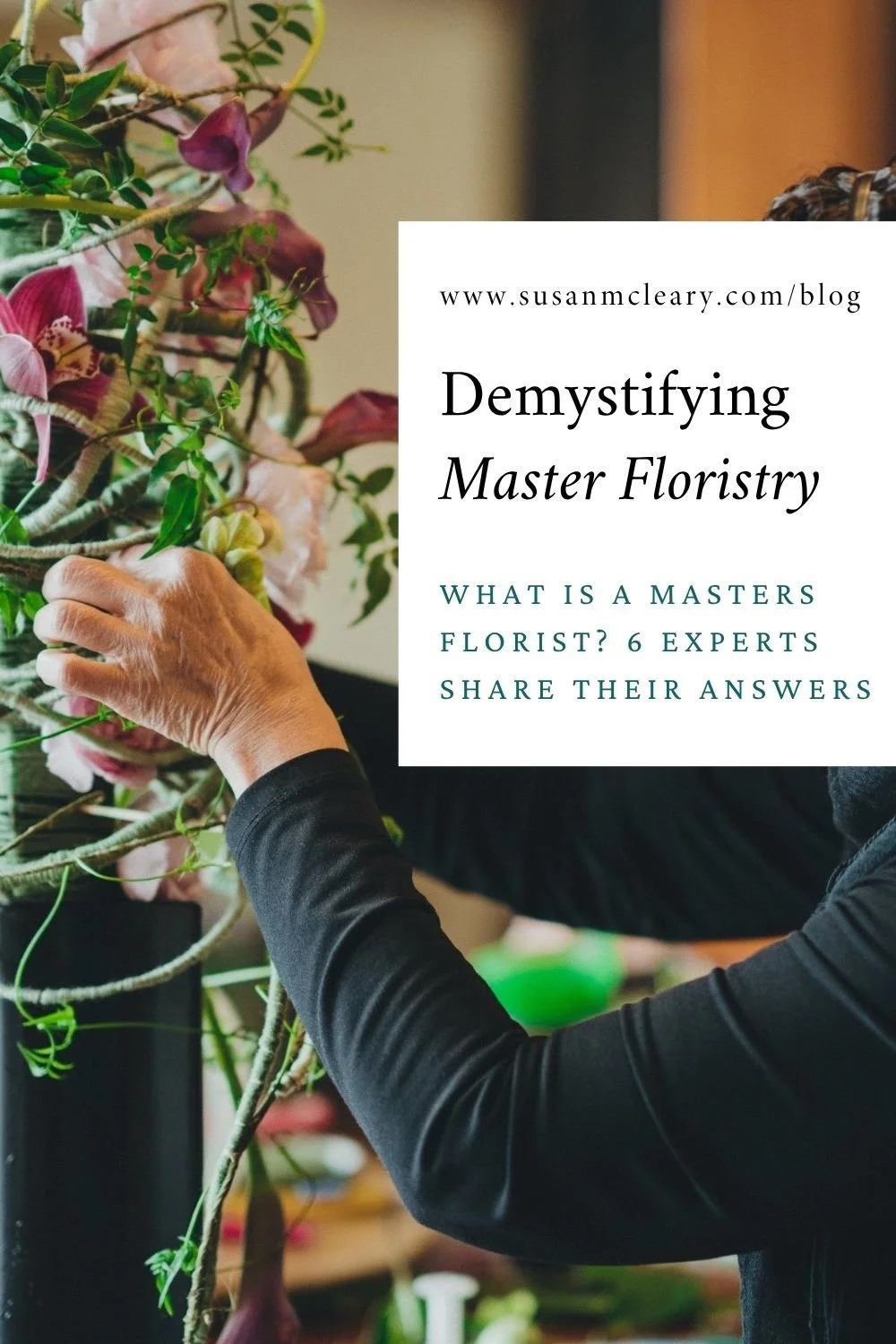
I find the world of floristry to be endlessly amazing to explore, as there are many ways to become a florist, many ways to work within the profession, and many ways to express oneself through this incredible medium.
There are many design styles to explore; many ways to apply one’s values and point of view to one’s work with flowers; and many ways to piece one’s floral education together.
Over the last 23 years of paying attention, I’ve noticed that the world of “master” floristry is often misunderstood and often plain unknown to the floral community at large.
Yes, the terms master and masterclass are used often in the floral design world, but what makes one a true “master florist”?
In the US, traditional, thorough skill-based learning has dwindled. There are fewer and fewer comprehensive floral design programs and colleges here, and while there are many extremely talented, creative, and experienced florists teaching, the instruction offered is often focused on practical, commercial floristry and not advanced techniques, skills, and art principles.
This type of practical education is still incredibly useful, but there is an entire side of floristry that is not being adequately introduced to the typical floristry student, not to mention the public.
I believe that it is vitally important to communicate to florists that there is a deep, rich well of traditions, handiwork skills, and art principles within floristry to explore. Knowledge of this invites us to deepen our practice and encourages us to research our craft and develop our skills. Continual creative growth will sustain us, keep us inspired, and will allow us to better participate in elevating our profession.
demystifying master floristry
Meet some Masters
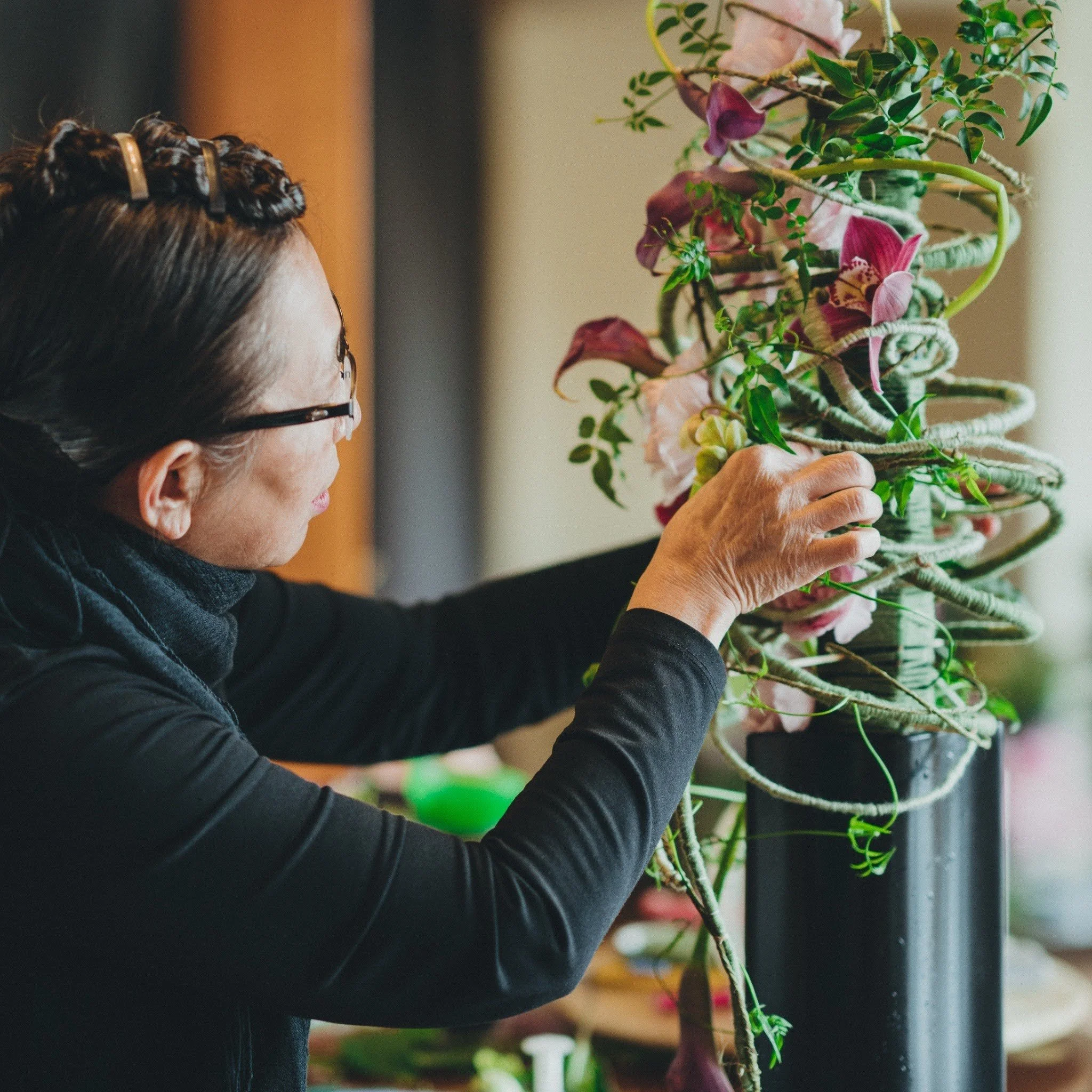
HITOMI GILLIAM
Hitomi Gilliam, AIFD, is a Japanese Canadian floral artist, instructor, author, and lecturer known for artfully combining her exquisite handmade structures with precisely placed floral elements- creating compositions that are unmistakably her own. Even after 40 years in the profession, she continues to push floristry forward by challenging conventional thought and continually innovating. A major focus of Hitomi’s current work is her "Reuse to Reduce," ethos- promoting eco-conscious mechanics like hand-made armatures instead of single-use design mechanics.
-
Structural Innovation: She popularized the "Tropical Nouveau" style and is known for intricate mechanics that allow for "less is more" linear botanical art.
Through her company DESIGN358, co-founded with her son Colin Gilliam, she hosts workshops, virtual programs, and maintains an active YouTube channel for floral education.
Her Floristic Dialog 'Sustainable Floral Design' Virtual Program: Renowned floral designers Hitomi Gilliam, Per Benjamin & Max van de Sluis join together to create a program that explores the rich heritage of European floristry, reviving time-honored arranging techniques while pioneering modern, eco-conscious methods for a greener future.
Hitomi popularized the "Tropical Nouveau" style and is known for intricate mechanics that allow for "less is more" linear botanical art.
She was inducted into the American Institute of Floral Designers (AIFD) in 1986 and received their Award of Design Influence in 1998.
Her "FlowerXArt" hybrid work has been showcased at the Sotheby’s Institute of Art in New York City.
She served as a judge for the prestigious 2020 Tournament of Roses Parade.
She is also a member of the Texas State Florist Association.
-
Website: https://www.hitomigilliam.com/
Instagram: https://www.instagram.com/hitomigilliam/
Youtube: https://www.youtube.com/hitomigilliam
Workshops: https://www.floristicdialog.com/
MIKE BOERMA
Mike is a fifth-generation florist and third-generation floristry teacher at the Boerma Instituut, a renowned international floral design school in Aalsmeer, Netherlands. Mike is one of the most knowledgeable people I know, steeped in the culture of floristry and actively participating in elevating the craft. He is a precise and skilled designer and seasoned instructor, integrating Japanese design principles (from his time living in Japan) with classic Dutch "Bloemschikken."
-
Competitor: Second place winner, Dutch Championship Floral Art (NK Floral Art) 2026.
Mike is a lead instructor at the Boerma Instituut, where he teaches students of all levels—from beginners to professional masterclasses.
He recently authored the 2026 Floral Trend Report for Marginpar, featuring styles like architectural floral art and the "Dutch Garden Style".
Beyond competing, Mike serves as a judge for various national floral contests. He also coaches students from the Boerma Instituut for international competitions like the WorldSkills floral design category, where his students have earned high honors.
He actively produces floral design tutorials on YouTube and hosts livestreams demonstrating techniques such as foam-free arranging and organic design.
-

LEOPOLDO GOMEZ
Leopoldo Gomez is a world-renowned Master Florist and international educator based in Mexico City. He is best known for his focus on sustainable mechanics and brilliant armature construction. His vibrant, organic compositions highlight his love for the natural world and the colors and forms of Mexico.
-
Founder of Centro de Arte Floral: Gomez co-founded and directs this floral design school in Mexico City, which offers professional curricula for both novices and experts.
He has achieved top rankings in prestigious competitions, including winning the Gateway to the Americas and placing 1st in the America's Cup (2018). He also represented Mexico in the 2019 Interflora World Cup.
Gomez spends much of his time teaching through international seminars, online video tutorials, and intensive courses.
-

MARK PAMPLING
Mark Pampling is a renowned Australian master florist known for his meticulously crafted form linear work and technical expertise in structure building. His work is clean, minimal, visually impactful and dynamic. Passionate about teaching, Mark is a clear and expert communicator of the principles of design and of the handiwork skills of master level floristry.
“For me, design principles are tools we can use when we create with flowers, to make the most of their inherent beauty.”
-
2019 Beijing World Flower Art Contest – 1st Place
2015 Interflora World Cup, Berlin – Judge
2014 Fusion Flowers International Designer of the Year – 1st Place
9th China International Orchid Show (Sanya) – Best Creative Award
2014 International Flower Contest Japan – Best in Show, Gold Award and Design Innovation Award
Asia Cup 2014 (Japan) – 1st Place – Surprise Table Display
2013 Fusion Flowers International Designer of the Year – 2 Silver Awards & 1 Bronze Award
2012 Fusion Flowers International Designer of the Year – 4th Place
2012 Interflora Australia Cup – Winner
2011 Interflora Australia Cup – Winner
Australian Competitor 10th Interflora World Cup 2004 – 3rd Place
-

BART HASSAM
Bart Hassam is a floral designer known for his expertise in building visually compelling compositions, in a modern, elegant style. His work is recognizable and uniquely his- a blend of Japanese floral influences, challenging proportions, and strong line work. His material choices show a love of his medium and a sophisticated sense of color and form.
“To create beauty through the plant material, with elegance and appropriateness-but above all, with a respect for the flower.”
-
World Cup Champion 2019 - Philadelphia, United States
Asia Cup Champion 2011 - Taipei, Taiwan
2019 World Cup Selection Competition winner - 2018
2011 Asia Cup Selection Competition winner - 2009
Australian Interflora Florist of the Year - 2015, 2013, 2009, 2005, 2002
Queensland Interflora Florist of the Year - 2015, 2013, 2009, 2005, 2002
Queensland Interflora Junior Florist of the Year - 1995, 1994
Melbourne International Flower & Garden Show - Design Competition winner - 2002, 2000, 1999
International Floral Designer/ Demonstrator/ Teacher/ Lecturer in Japan, Taiwan, China, Hong Kong, Mexico, Italy, Spain, Germany, Russia, New Zealand and Australia.
Co-owner of Maison Fleur Floral Design, Brisbane
-
Insta: barthassamfloraldesign
Website: barthassam.com
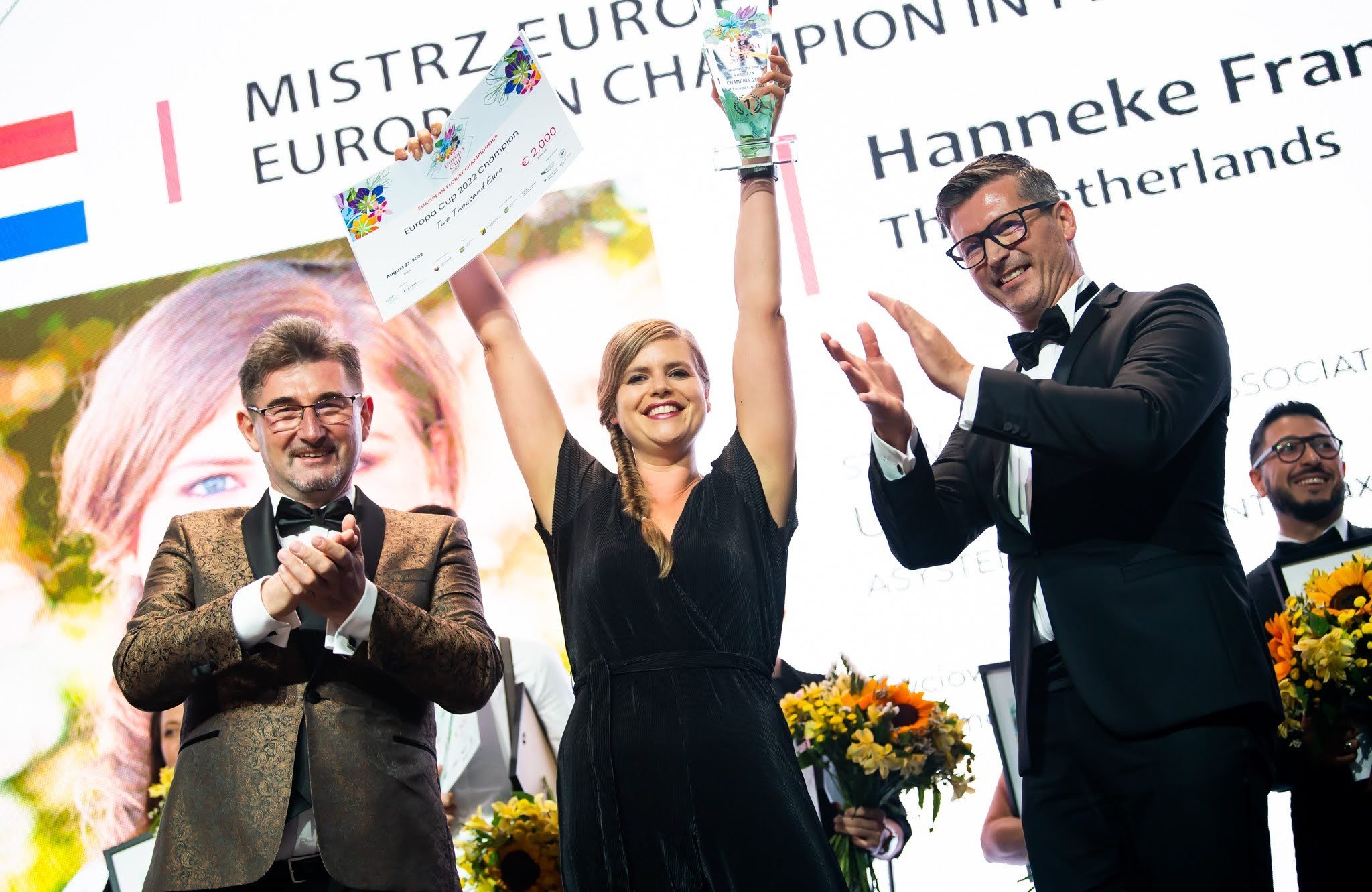
HANNEKE FRANKEMA
Hanneke Frankema is a prominent and celebrated Dutch floral designer known for her technical handiwork expertise, expert color blending, and decorative style. She is a leading figure in international master floristry, known as "The Iron Lady," due to her use of impressive, intricate hand built wire frames in her designs.
-
DescriptiEuropean Champion: Won the Europa Cup 2022 in Poland, becoming the first Dutch winner in 38 years.
Dutch Champion: Secured the Dutch National Championship of Floristry in 2018.
Master Florist: Was the youngest person ever to be awarded the title of Master Florist.
World Cup Participant: Represented her work at the World Cup Floral Art 2025 in The Hague with her show titled "GROWTH!".
International Educator: She travels globally to teach masterclasses and perform demonstrations in cities such as Beijing, Moscow, and New York.
Jury Member: Served as a judge for two seasons on the Dutch television program "The Netherlands' Best Flower Stylist".
-
Website: https://hannekefrankema.com/nl
Instagram: @hannekefrankema
WHAT IS A MASTER FLORIST?
In my mind, a master florist is one who has studied, practiced, and worked for years until they have achieved the highest level of proficiency in their craft.
They have an extensive working knowledge of plants and flowers, including selection, conditioning, and binomial nomenclature. They possess a thorough understanding of the principles of design and the golden ratio and how these concepts can be applied to floral work. They are able to articulate their decision making process and are able to analyze work for their benefit and to benefit their students.
There is also a wide handiwork skillset that a master possesses including wiring, armature making, structure building, and construction principles. In my mind, a master florist can create the entire composition with their skilled hands- no vase needed!
The study of master floristry might seem daunting, but I choose to view it as exciting- there is a lifetime of skills and ideas to develop and explore. I find it to be a fascinating rabbit hole; one I’ve been traveling down for many years and one that I hope to continue exploring. Along the way, I have gathered skills, confidence, and innovative insights. These knowledge morsels have changed my understanding of my medium and have completely transformed how I approach my work.
To participate in demystifying the master floristry world, I have polled several masters that I admire and have had the pleasure of spending time with and learning from. I’ve compiled a list of some of my favorite resources for more information, skill building, and inspiration.
Questions, Answered:
1. WHAT DOES “MASTER FLORIST” MEAN TO YOU / WHAT MAKES ONE A MASTER FLORIST?
HITOMI GILLIAM:
A master florist is a well-rounded, experienced and accomplished designer and educator.
A master florist has studied at the highest level academically and has an intimate understanding of the fundamental theories of design. He/She is well-versed in the elements and principles of design as it applies to all forms of art.
A master florist has a thorough command of botanical nomenclature.
Knowledge of method and creative processes, techniques and mechanics of design from past history to current times.
They must be well-versed in all facets/categories of floral design for commercial applications as well as in competitive designs.
A master florist must also have the ability to evaluate designs objectively so is able to communicate the what, how and why of design.
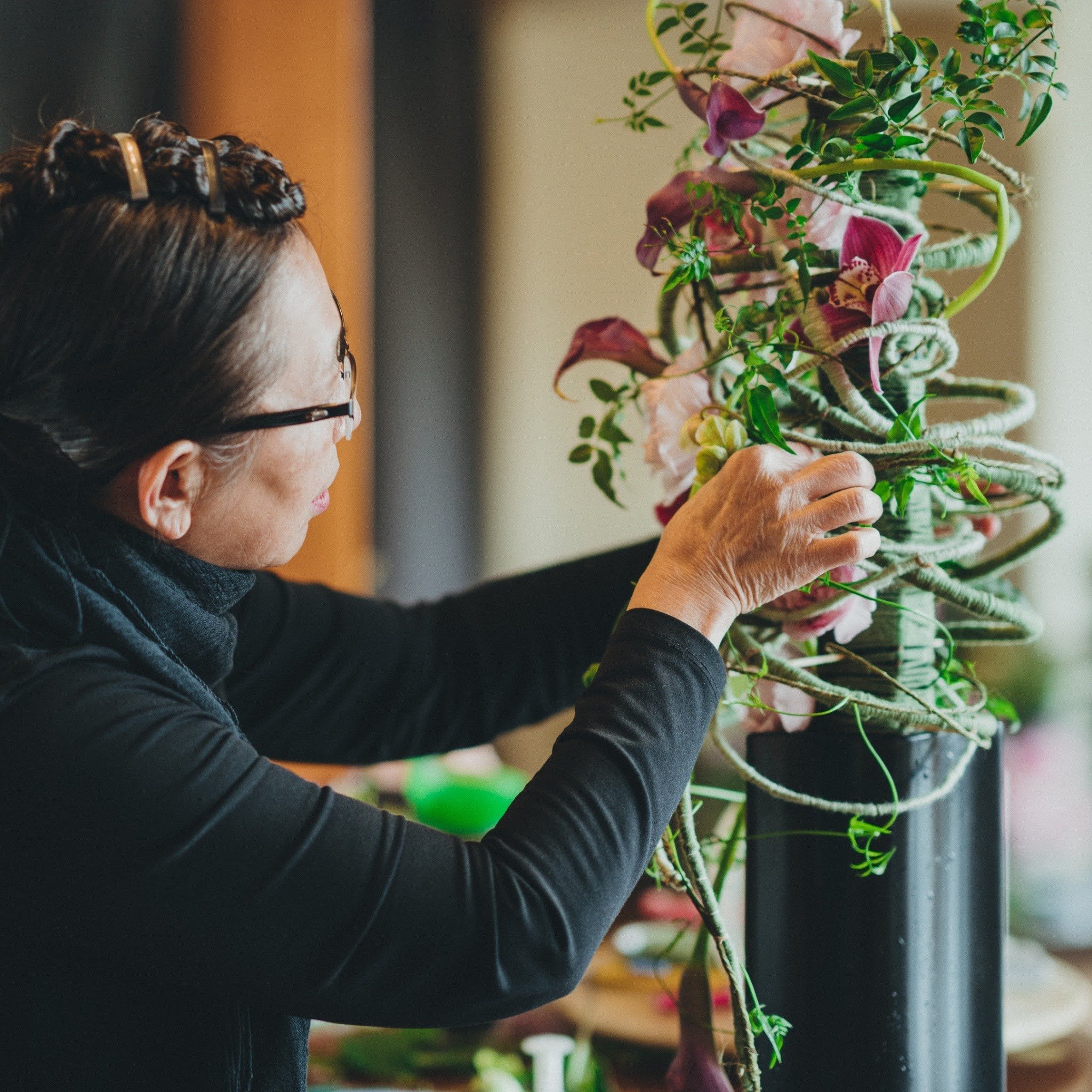
Floral Design by Hitomi Gilliam
This ability lends itself to defend the integrity of the composition, as well as to advise the designer on how to improve.
[To become a Master Florist,] study with a recognized floral master, be of curious mind, and engage in continued self-study of masters’ works and their teaching.
Areas of study may include…
Fundamental Elements and Principles of Design
Comprehensive binomial nomenclature
Care and handling of botanicals
Up to date knowledge of methods, techniques and mechanics of design
Thorough knowledge of all floral supplies and their applicability and sustainability
Study beyond the general craft of floristry to creative floral artistry
Experience in competitive designing to establish mastery
Study the art and principles of teaching
Study different forms of artistic discipline
Mike Boerma:
In my opinion a Master Florist is a florist who has a deep understanding of the botanicals that we work with and the art of arranging them in an aesthetically pleasing way.
I think an official Master Florist is someone who has been recognized and certified by a judging panel of professional peers.
This is because in some countries, this title can only be given to one who has passed the exam that is held to a certain standard.
In the end, I believe that a title is not as important as having the actual skill and knowledge. As that is actually the only physical proof and therefore in the end the only thing that is really important.
A Master Florist is not something one becomes overnight and is indeed something that takes a wide range of programs, studies and years of experience afterwards (or beforehand).
At our school, the journey is done by following programs of incremental difficulty.
We have the Professional Dutch Floral Design course, a 20-day program which is all about fundamentals of floristry, where you learn to make your standard and classical designs which serve as a strong foundation.
There’s a reason that the classics are the classics, they are challenging you to manipulate the flowers into certain shapes and forms. Think about a drop-shape for example.
Then there is a lot of theory. We introduce the design scheme, which is used to analyze any type of floristic work and can be used as a starting point to create designs.
Many of the elements of the design scheme are incorporated during the fundamental program which is the Professional Dutch Floral Design Course.
Then there is the Advanced Dutch Floral design course, another 20-day program, which builds further upon the Professional Course. The Professional Course focuses on replicating specific designs and learning how to create works in that way, the Advanced course is focused on creativity and starts to let you create your own designs. It gives you the tools and techniques to start making what you have in your mind.
Then the last step is the International Master Florist program. This is our most intensive program and is fully taught by Gregor Lersch, who is sometimes called the Master of Masters. The reason for that is, the fact that he has taught and trained many successful Master Florists around the world. Many florists that have become National Floristry Cup winners and even World Cup winners will mention Gregor as one of their formative mentors.
We believe that if anyone is certified to judge whether someone is ready to be a Master Florist, it’s Gregor, with his vast amount of theoretical and practical knowledge and seemingly endless pool of creative energy.
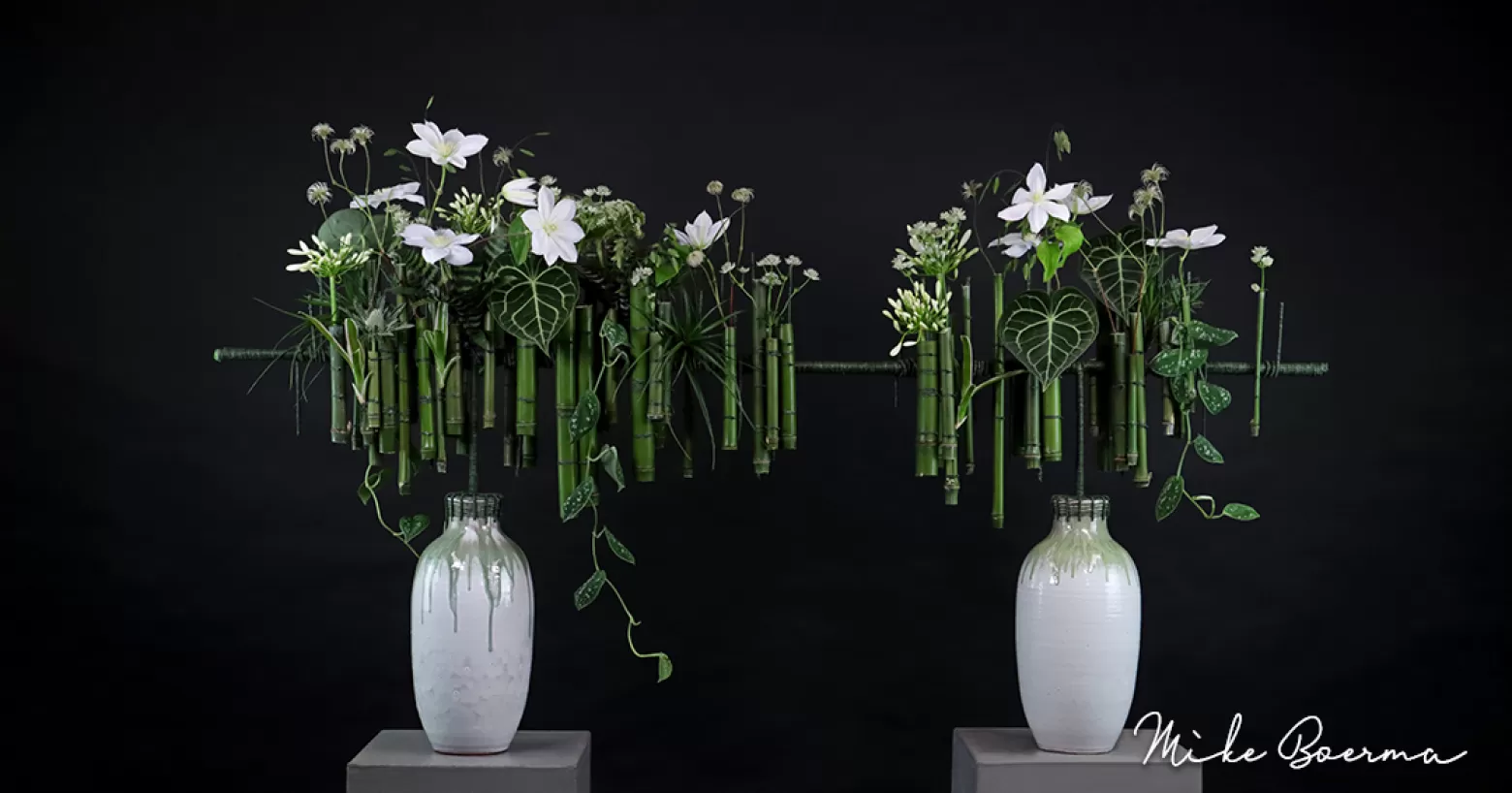
Floral Design by Mike Boerma
Of course at every program there is a panel of judges, so it’s never one person who has the final say in things. The International Master Florist program for example is nowadays judged by a team of 4 judges.
Yet there are of course many roads to becoming a Master. In the Netherlands there used to be a ‘certified Master Florist’ for Dutch Florists. In this way, you would start a mentorship with another certified Maser Florist and that would take a year.
Originally in the 60’s, this is the road my Grandfather took. Nowadays it’s legacy has been taken over by a government owned school. However, I think it’s not quite the same as it used to be. Though I do know some florists that I have a lot of respect for that have finished this in more recent years and are making great work, I think this is more of a Botanical art Mastership than a Floristic Art Mastership. The difference is that one is more about creating an art object using parts of botanical materials (think seeds) and the other is still very clearly about the arranging of flowers (floristry).
Then there are the Master schools of Germany, Switzerland and Austria, where a diploma is still required to even call yourself a standard florist. These all have an incredibly high standard of work, though unfortunately only teach in German.
I understand that for many florists it’s difficult to find the time off to follow a study. However, in the end I believe it is worth taking that time and it eventually pays back for itself.
We’ve had many a florist with sometimes even decades of experience that have come to our first level program and found that they learned so much that they wish they learned sooner. In the end, what I think is the beauty of this profession, is that there is always something new to learn.
It's a lifelong journey of exploration and self growth. Heck even Masters that I look up to like Gregor Lersch or Frédéric Dupré who have been doing this for decades are always thinking up something new and interesting or sometimes learn something new from another florist or student, be it a style or a technique. The artform itself is also always reinventing itself or some new trend emerges, or an old trend re-emerges. It’s always exciting and never boring.
The good thing is that there are people out there that have the knowledge and are willing to share it. We don’t have to invent or reinvent the wheel ourself. There are tried and true methods and then there are new methods. All of which can be learned. Yes, you can study by yourself and use the internet to learn new things. That definitely works. However, this is a physical, hands-on type of craftsmanship.
Not everything can be understood from simply watching and replicating. It really helps to have someone with the knowledge and skills to be there with you on the spot. Able to correct and manipulate your work physically.
In the end, what do I think makes a good florist and what do I think are the skills a Master Florist needs:
Knowledge of design theory and being able to apply it; for example understanding of proportion and rhythm of flower placement, but also color theory.
Practical skills; being able to manipulate materials in a way that can serve you technically, but also decoratively.
So basically, how to create your own structures and bases, how to use different mediums to apply flowers to.
But the most important is always a great understanding of the fundamentals, from there on out you have a good foundation to build further upon.
LEOPOLDO GOMEZ:
For me, the title “Master Florist” pertains to a way of “living” floristry, and it can encompass one who dedicates their time and studies to not only master the art form of floristry, but also to understand the science behind the process, care, and handling of this amazing botanical medium as well. To have great respect for flowers and plants as living and vibrant beings is a part of this vast area of study. I also think it is important for masters to strive to connect their arsenals of accumulated knowledge into working with their hands to translate great floral expressions from their ideas and inspirations. Meaning, it is essential to not only be able to truly comprehend the concepts and crucial techniques in floristry, a master should be able to execute these visions with precision while also displaying their deep understanding of the subject matter.
There are various ways to work toward becoming a Master Florist, and there are many programs out there that can help someone to achieve these goals. The main thing in common with all of these programs or curriculums is that there is an ongoing quest for knowledge and continuing education between them. I really do believe it is important to continue seeking new ideas, techniques, and even sciences behind everything in floristry to continue expanding our realm of understanding. I am one of those who feels you can never really “know it all,” so continuing to explore, learn, and challenge yourself is all part of what being a master is about.
MARK PAMPLING:
A Master Florist is a Designer who consistently strives for – and frequently achieves – excellence through an ongoing commitment to understanding floral design and presenting it at the highest level. Mastery is not about knowing everything, but about having the experience, knowledge, and analytical framework to confidently address almost any floral situation.
A Master Florist draws on a broad range of experience across many areas of floristry and is supported by strong theoretical understanding, advanced technical skills, and a highly developed creative mindset. This combination allows them to analyse challenges, identify possibilities, and propose effective, thoughtful design solutions.
Importantly, these solutions are often shaped by a personal perspective, giving the work originality, a recognisable voice, and, ultimately, a signature quality.
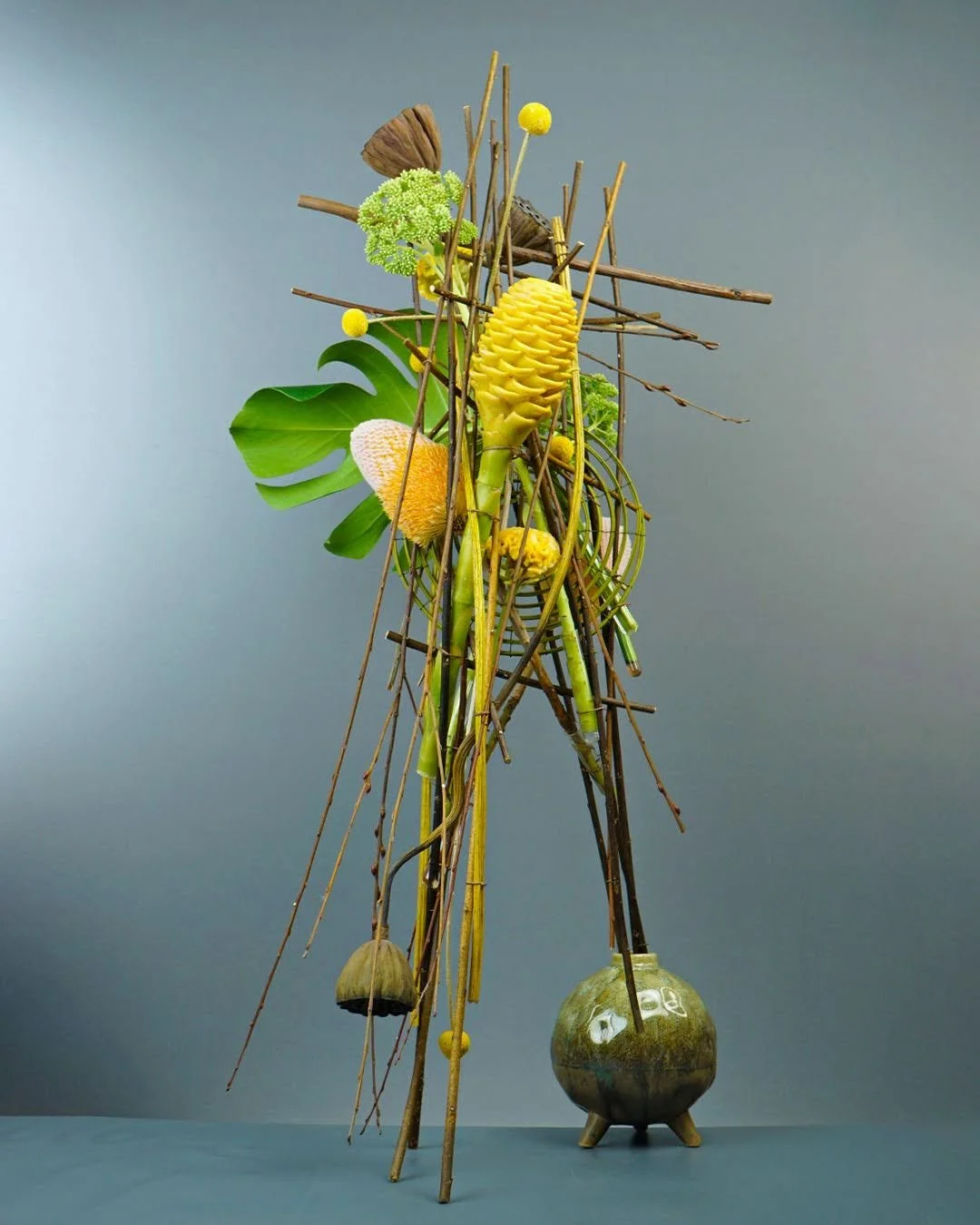
Floral Design by Mark Pampling
BART HASSAM:
It means a florist who has a deep knowledge and ability within the world of floristry.
Traditionally, it’s an actual qualification - attained through only a few schools around the world from Germany/Austria/Switzerland - mostly European. Though, these days, the word is more diluted and is used more freely by people who excel and have an extensive knowledge and set of high level skills in the world of floristry.
HANNEKE FRANKEMA:
For me it has been very important to get this title. In the Netherlands it is the highest official education you can get in floristry. In the Netherlands it is an official title, not just a short course you take from a florist. So it really means something. Nowadays it is possible for people to take unofficial courses and call themselves Master because someone gave them this name.
2. HOW DID YOU BECOME A MASTER?
LEOPOLDO GOMEZ:
In the beginning of my floral career I sought out different floral schools and many teachers to help me on my journey to understand floral artistry and the proper techniques I should be practicing to achieve my goals. I also studied a great deal on my own, seeking to understand the varying perspectives from the very well known teachers from around the world.
It really felt as though all of the knowledge was definitely not in one place, and it became kind of my mission to put valuable pieces of information together where I could find them to build a more complete repertoire. This involved going back in time a bit to seek not only the basics and the principles and elements of design, but also the history and beginnings of where this incredible art form and in-depth study came from.
I explored, experimented, and studied as much as I could. I even reached out and wrote to many floral teachers and artists that I admired to ask for guidance and advice. Fortunately, many of my idols responded in kind and encouraged me to continue asking questions and never stop my quest for more floral knowledge.
Various curriculums and different accreditation programs also guided me to format my own curriculum for my floral school, and this eventually led to the foundation of shared knowledge that I operate with today. With the realization that “the more you teach, the more you learn,” I have not looked back since I began sharing my acquired knowledge with others.
My quest for more knowledge continues every day, and I do not foresee it ever stopping in my lifetime. I will always be a student, and I will always have the desire to learn more. I think it is impossible to “know everything,” and that is what makes this study endlessly interesting for me.
MARK PAMPLING:
I became a Master Florist through a long-term, informal commitment to searching for excellence and deeper understanding. I actively pursued opportunities – competitions, exhibitions, demonstrations, workshops, and teaching – that challenged my thinking and expanded my design vocabulary.
Formally, I achieved Master Florist accreditation through the New Zealand Professional Florists Association, which offered a structured pathway. This process required the submission of evidence demonstrating my experience, qualifications, achievements, and depth of design knowledge.
Under current Australian educational standards, there is no recognised Master Florist qualification, so Australian Designers seeking this level of accreditation often need to look internationally for formal recognition.
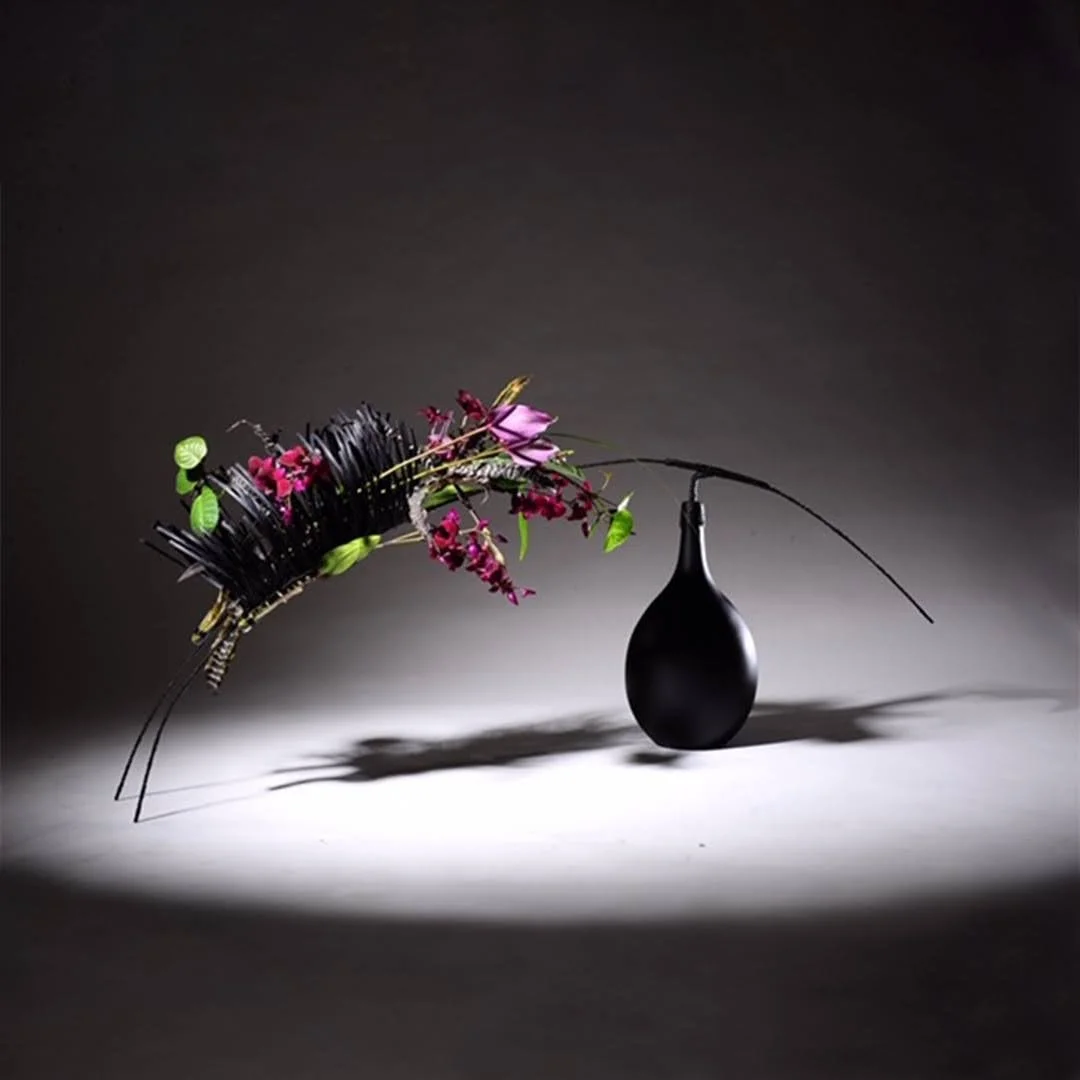
Floral Design by Bart Hassam
BART HASSAM:
I’m still not sure that I am. People have certainly called me that, and maybe it is truly for others to decide. I have no qualification to say that I am.
What I can say is that I have worked on my floristry skills since I was 13 - so for 35 years - and I continue to do so.
I have studied in Western and Asian schools.
I have been awarded many prizes, and worked with flowers in many countries, all which help to broaden my knowledge and skills.
And my focus is to learn from nature, for it to be the guide and teacher.
I think the key to excelling in any area is to explore all areas of your chosen field, and practice - coping and repetition are key to truly understanding. Only with repetition, are you then truly free to experiment.
HANNEKE FRANKEMA:
I went to school for 7.5 years and I was the youngest florist at the time to get the title. I was 21 years old when I got the title and now I am 42 years old so I have been a master florist for 21 years now! To become one you need to make a big project within floristry that is new and contributes to the general evolution of floristry. For example, introducing new techniques and using materials in a new way. I made bridal bouquets from only leaves (no flowers) showcasing 35/40 different techniques. So lots of experimenting and testing.
3.WHAT DO YOU HOPE TO OFFER THE WORLD THROUGH YOUR WORK AS A MASTER?
HITOMI GILLIAM:
My specialty in floristry is teaching interdisciplinary art processes that encourage designers to implement a deeper artistic approach to their floral work.
My interests extend beyond what is commonly considered as “floristry.”
I combine floral design with other art disciplines to create hybrid art that incorporates processes and techniques which may be prevalent in other mediums.
I especially love to focus on structure building and fiber art techniques.
These stand alone art works are then combined with fresh flowers, elevating both.
LEOPOLDO GOMEZ:
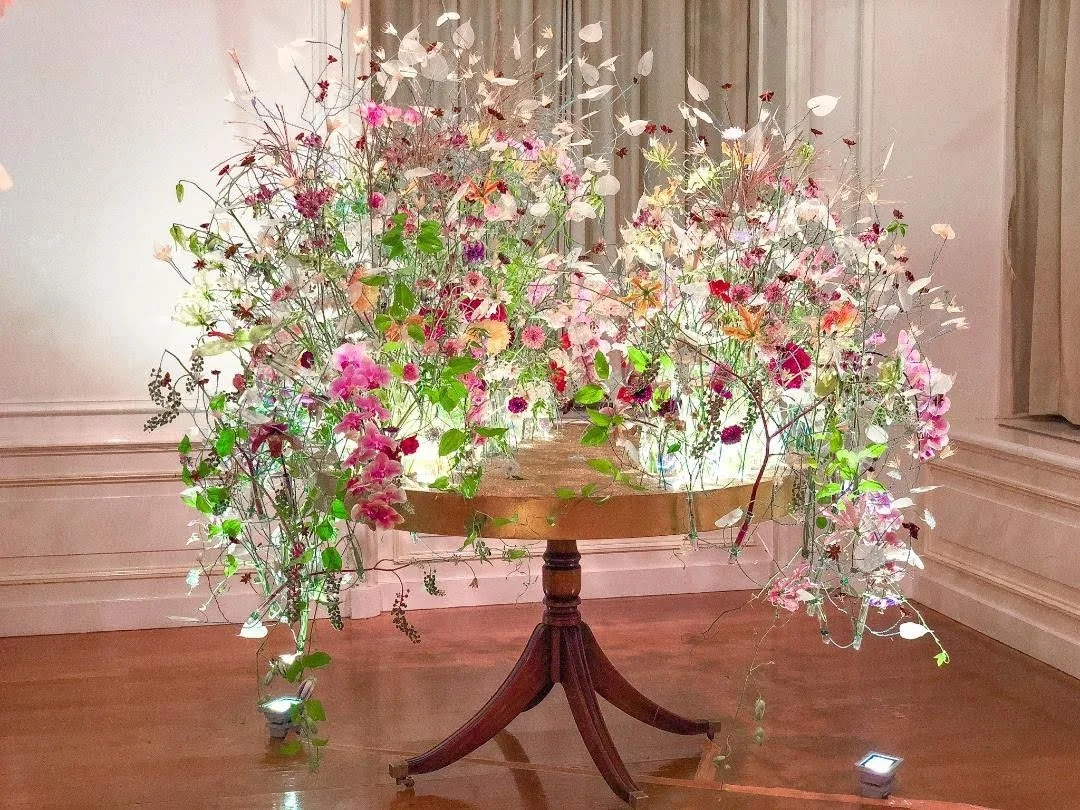
Floral Design by Leopoldo Gomez
Through the care and respect of working with flowers, I hope to relay a thought for people to consider. My perspective is that through the awe-inspiring gift of flowers, we can reflect upon situations in our own society, and learn by nature’s indisputable example that not only plants and flowers, but all living beings can coexist in a wonderfully integrated way.
It is my experience of what I’ve seen growing up here in Mexico. In the jungles you can find great big pine trees growing tall right next to massive monsteras and palms, and all with vibrant orchids sprouting their healthy roots right on top of these happy plants and trees. In my designs, I also like to combine plants and flowers into the same composition regardless of where their origins are. Whether they thrive in the driest of deserts or grow in the coldest of mountains, I believe they can exist gracefully together in the same surroundings.
It is beautiful, diverse, harmonious, and happy. If everyone could see through my simple florists’ eyes, I imagine the world could be an exquisitely peaceful place, always.
MARK PAMPLING:
Through my work, I hope to offer a way of seeing horticultural materials that is enriched by a deep understanding of design. Whether or not the viewer consciously recognises “design” is less important than whether they intuitively sense that something more has been added – something that heightens beauty, meaning, and appreciation.
Flowers and plants are inherently beautiful. Designing with them in a considered and intentional way can amplify that beauty, reveal their unique qualities, and invite a deeper emotional or visual response. When people feel the impact of design – even if they can’t articulate it – the Master Florist has fulfilled their purpose.
I also hope to challenge the perception that florists, even at advanced levels, simply “arrange flowers” or make pretty things. A Master Florist is a well-rounded creative professional: someone with extensive botanical knowledge, refined craftsmanship, and a sophisticated understanding of design theory and its application.
This skill set allows Master Florists to work objectively and effectively across any brief – regardless of personal taste. Even if a designer dislikes certain colours, flowers, or styles, they can still create exceptional, cohesive work that fully serves the client or context. That ability—to design beyond personal preference—is a hallmark of mastery.
BART HASSAM:
Beauty.
That’s all. A viewpoint on beauty.
How I see it and how I appreciate and love flowers. It won’t be everyone’s favourite way of seeing them - but it’s my way of honouring them and showing them the most respect I can.
I enjoy using my skill to create complex simplicity - and there’s ego in that - but I try to not let that ego be at the forefront. Even when I’m self-congratulating whilst I’m working, I usually find that that ego gets overtaken by the beauty of the flowers and what I’m making, and the decisions always happen for the best of the botanical material. For me it should be less about what I want, and more about listening to what makes them shine the most.
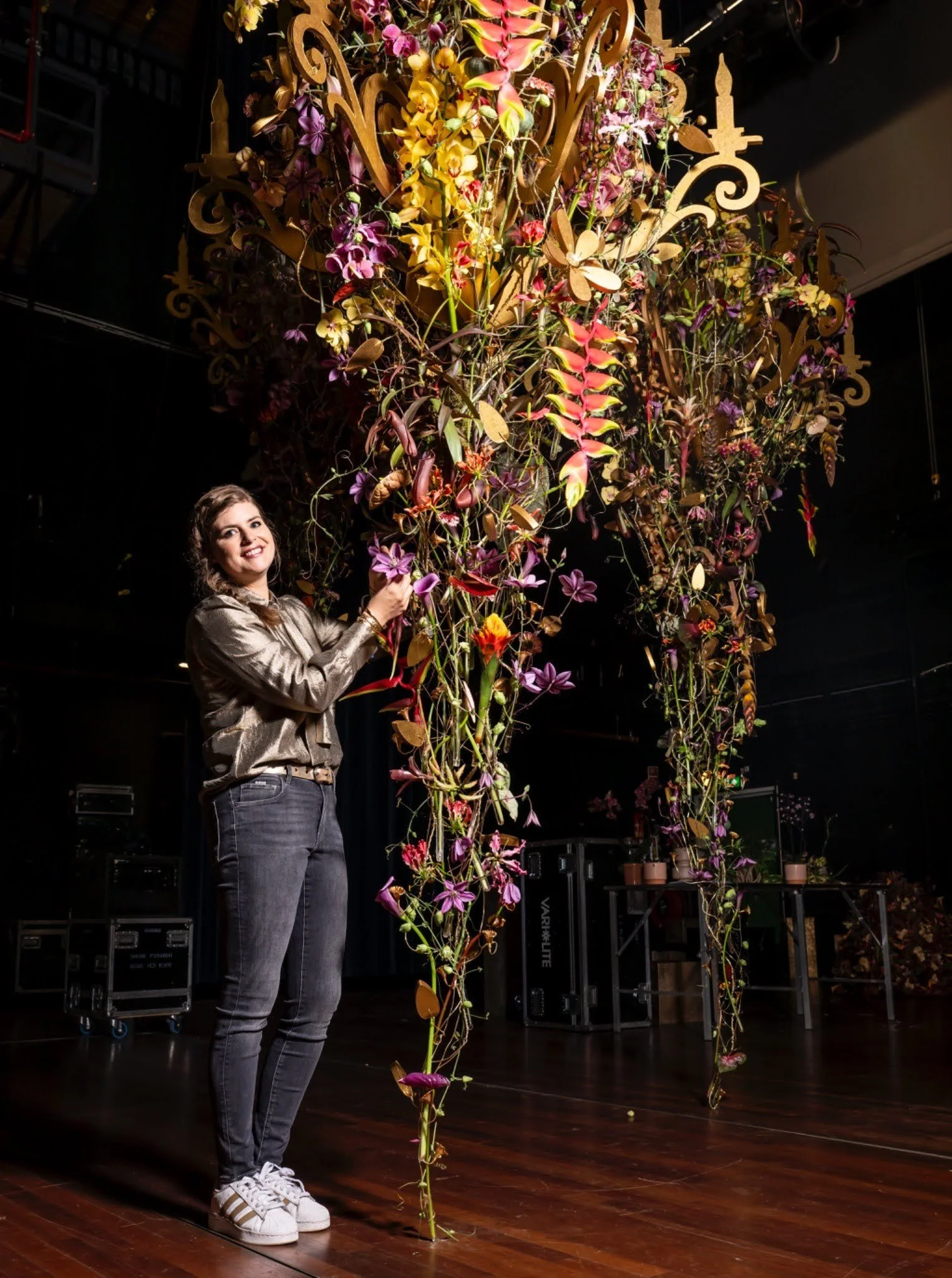
Floral Design by Kanneke Frankema
HANNEKE FRANKEMA:
That more people love and respect our profession, many now think it is a very romantic profession, but it is actually hard work. Next to this I just love to teach and show my techniques. I always enjoy it when people say “ahhhhh so that is how you do this… I’ve always wondered about it.” I love to open people’s eyes and to see them grow as florists.
4. WHEN YOU TEACH, WHAT CONCEPTS AND TECHNIQUES ARE YOU MOST PASSIONATE ABOUT OR ARE MOST TRANSFORMATIVE FOR YOUR STUDENTS?
LEOPOLDO GOMEZ:
I really want to convey that as floral art is an important part of humanities studies, it can be a very captivating way to express existence, culture, emotion, and the human experience overall. I believe this form of art is completely attainable for everyone, and through my comprehensive discussions covering the principles and elements of design, I hope that students can be able to understand that these concepts can come from an intuitive and innate part of their nature. Therefore, it is completely tangible for them to comprehend, communicate, and create what they are inspired by. With much practice, study, and application, students can create what they see in their minds and hearts, and bring their ideas and aspirations to life in the most beautiful ways.
MARK PAMPLING:
I am most passionate about helping students understand the fundamental elements and principles of design, and – crucially – how they interact. When students grasp the power of these basics, it often sparks a lifelong pursuit of refinement and excellence. That moment of realisation can be genuinely transformative.
I am equally committed to the development of strong craftsmanship skills, refined through practice and application across a wide range of styles and contexts. Design understanding without technical excellence is limiting, just as technical skill without design knowledge restricts creative growth.
True development occurs when design thinking and craftsmanship evolve together.
BART HASSAM:
The more I teach, the more I realise people really just want to know where to put the flowers. It seems obvious, but I think it’s actually the most difficult thing to teach - as we’re dealing with an organic material, which will always be different in every and even the same scenario.
I find the most useful things I teach are proportion, placement and editing. The Golden Rule or Fibonacci Principle is something I find useful to explain - and then directly relate it to how we use it in floral design.
I also think, in general, the world uses too much of everything, and everyone could learn to edit their work a little more - I find it’s a useful skill to teach, which helps a florist over their lifetime.
I, for the most part, have a minimalist approach to my floral work, which seems to be in the minority at this time around the world - so it does become a useful teaching tool.
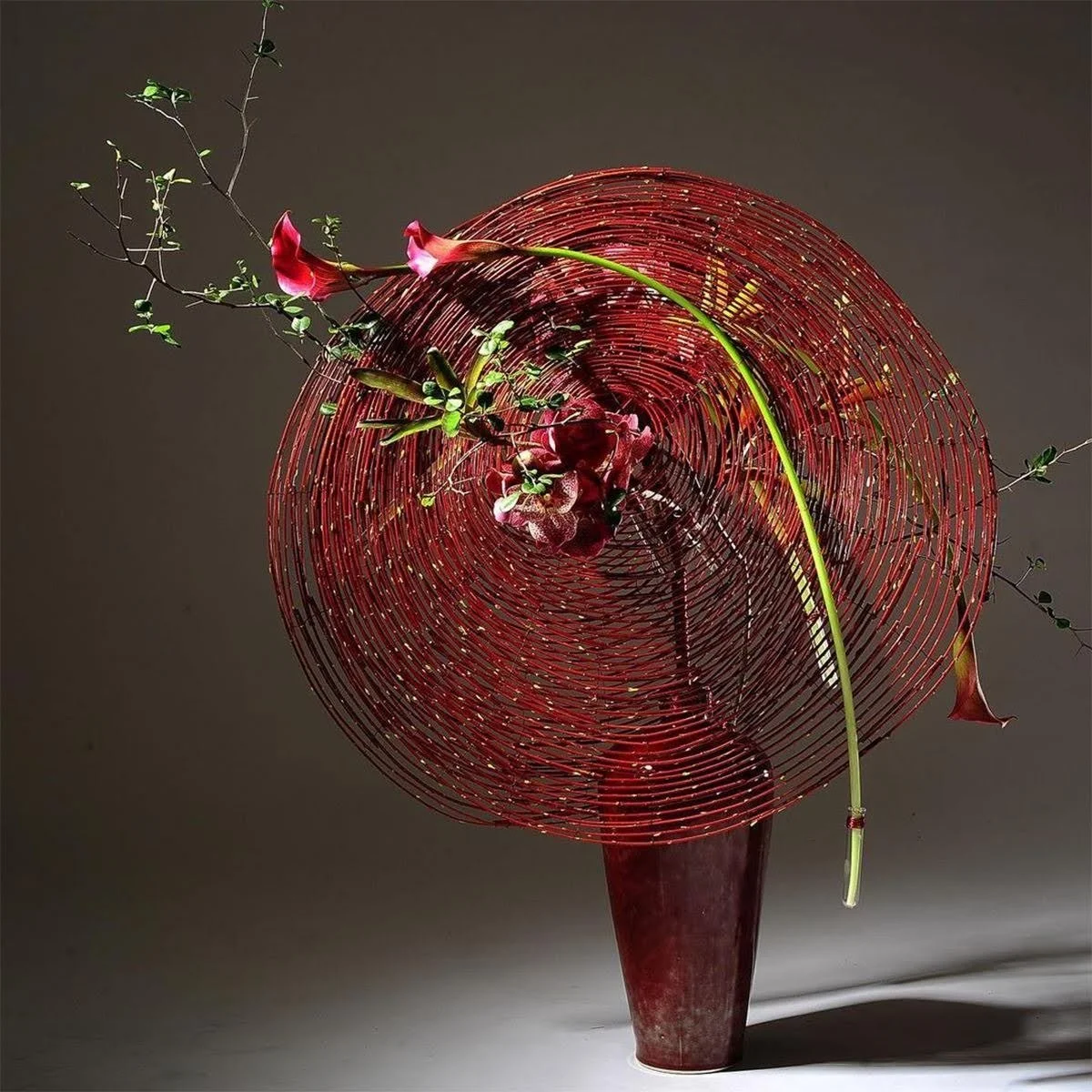
Floral Design by Bart Hassam
HANNEKE FRANKEMA:
I think it is the mix of many techniques usable in my different designs opening up all the possibilities for the students to be able to use them in their work, shop and profession.
5. WHAT ADVICE WOULD YOU GIVE TO A STUDENT LOOKING TO BECOME A MASTER?
LEOPOLDO GOMEZ:
There are so many paths to explore in the floral world. I will always encourage students to choose those that fulfill their curiosities and nurture their creative souls most. If they have decided to pursue this field, they already know in their hearts what will make them happy. And yes, there are challenges that will most likely arise along the way, but just like with anything else in life, it will be most important to just keep going, and never give up. I think the best advice will be to keep an open mind and always be a student.
MARK PAMPLING:
Design is complex and cannot be fully understood or integrated overnight. Be patient, and actively seek diverse opportunities to learn, experiment, and grow.
Avoid limiting yourself to what you naturally like. Projects involving unfamiliar themes, colours, styles, or materials often provide the greatest learning. These challenges can be uncomfortable, but they demand objectivity, problem-solving, and adaptability – and that is where real growth occurs.
Learning to design effectively beyond personal preference is essential. It develops your ability to analyse a brief, respond to its requirements, and deliver successful outcomes in any context – an essential skill for anyone aspiring to mastery.
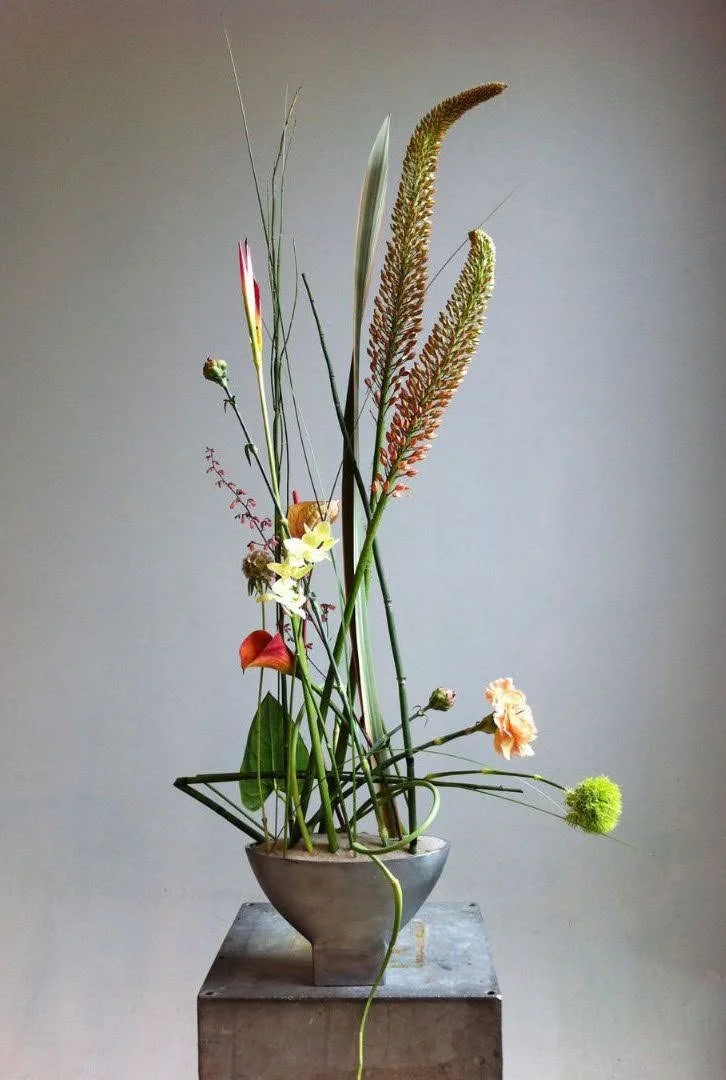
Floral Design by Mark Pampling
BART HASSAM:
Take your time. It should take time. Copy others' work (for practice) to experience how others use flowers. Step into their shoes, maybe it will influence you in some way. Show you what you like - or don’t - it’s all useful. But work towards a viewpoint which is your own. It may align with others, but when you start to dissect and narrow it down, you will find it will be totally unique to you - which will be your strength.
Do everything relating to floral design. Volunteer to help other designers, work in your garden, attend lectures, visit art galleries and look at botanical drawings, go to the flower market, visit a grower, take an Ikebana course, a weaving course, a pottery course, walk the streets of your city and notice the types of things that grow well there - and how they grow. Do all of it. It is all educational and relating to Floral Design.
HANNEKE FRANKEMA:
Work hard, make mistakes and learn from them! Making mistakes makes you grow as a florist!
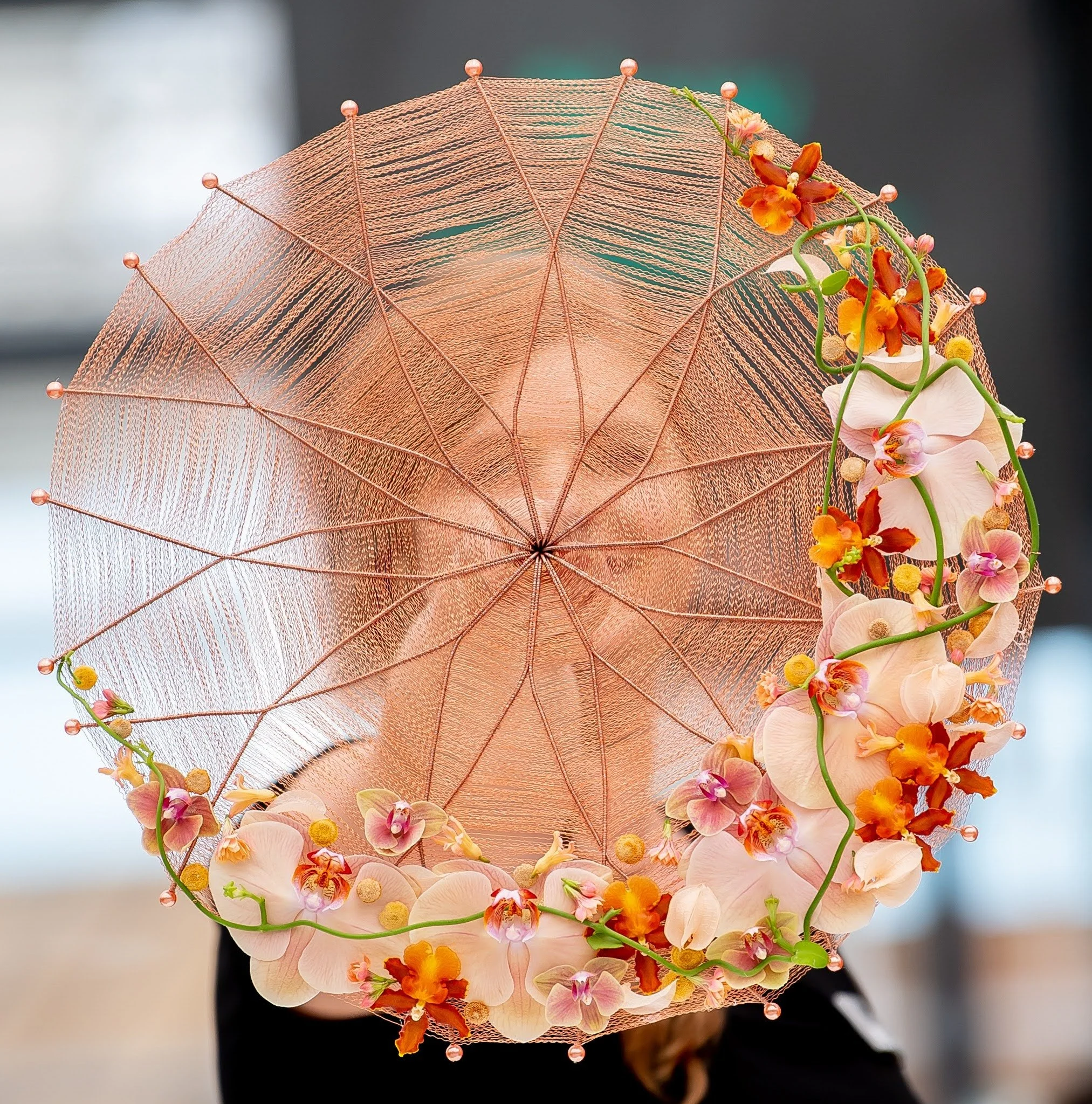
Floral Design by Kanneke Frankema
Even if master level floristry is not something you are working towards, you can glean valuable insights by paying attention to the masters.
There are workshops you can take advantage of and a whole world of fascinating master floristry competitions and symposiums to follow, support and attend. The more you know about this high level of floristry, the better you can communicate the richness of our craft with the public and help to push floristry forward.
Resources
All of the masters quoted here offer classes and instruction, but here are a few more; along with a few skill building resources worth mentioning for their accessibility and affordability.
-
An incredible resource for master courses, professional certification, and their International Master Florist program taught by living legend, Gregor Lersch. They also have a wonderful Youtube channel with hundreds of hours of demonstrations from numerous masters.
-
Floos in an incredible, online library of over 800 step by step technique classes, taught by masters. Affordable and concise, this membership is indispensable!
-
Brilliant master florist Mark Pampling offers online classes, ebooks, and workshops.
https://flowerthinking.com/products/one-container-five-elements
-
Joseph is an incredible teacher who fuses relevant aesthetics with master floristry level skills in his online floral school.
-
Relevant, comprehensive floral design reference book for the modern florist.
https://www.amazon.com/Flower-School-Principles-Pleasures-Flowers/dp/1787138208/
-
One of the most influential designers in my life, Hitomi is a master sustainable structure builder and line designer offering online classes, workshops, and coaching.
-
Artful, highly skilled, and endlessly creative, Leopoldo Gomez offers an affordable online membership worth checking out!
-
By American Institute of Floral Designers
An essential text outlining the terms, principles, and practical information required for proficiency.
https://schifferbooks.com/products/the-aifd-guide-to-floral-design-terms-techniques-and-traditions
-
Yes, this is me! My goal is to offer skills and ways of working with flowers rooted in master floristry skills and art principles, but streamlined for applicability to commercial event floristry.
-
Approachable, transformative, expert instruction focusing on spiral bouquet construction ( an essential master floristry skill ) and color theory.
-
Floral Fundamentals is an international organization and digital publication dedicated to connecting professional, traditional florists directly with growers and suppliers to share education, design techniques, and high-quality products.
https://www.floralfundamentals.com/about-floral-fundamentals/